Here’s my protein ‘recipe’ for a less painful workout and overall strength:
During the day, 1g protein/ lb bodyweight.
3-5g creatine 30 minutes before working out.
1/2 to 1 ‘serving’ of a BCAA supplement (leucine, isoleucine, and valine) up to 30 after working out. Other amino acids can actually interfere w/ BCAA effectiveness, so I avoid the ‘extra mega everything’ kinds of supplements.
At bedtime, 1 serving of a casein protein shake. Adding it can improve muscle building, and casein is slow-digesting so in theory better for overnight recovery than a faster digesting one.
Oh, and I’ve gained about 2kg while wearing looser clothing. I have measurable strength gains in the last couple of months.
It’s time for a diet upgrade. I’m not traveling (thanks, covid), I have access to more fresh food. I’m ready to up my exercise game, since I’m experimenting with Meloxicam to see if I can build strength without injury to the entheses. And I’m watching a course on changing body composition.
Here’s the plan:
Vegan when I can (price and environmental impact), some chicken and fish, maybe some egg whites. High protein: 75g+ per day. Low cost (duh). I’m going to supplement pre- and post- exercise with creatine and BCAAs. I’ll be adding a protein shake for an additional 15g protein and 75 kc just before bed.
Here’s an example. It’s NOT vegan, gluten free, high protein, high omega 3 (with fish oil supplements), 6-meal timing optimized, under 1800 kc, and relatively inexpensive.
Here are the macros: 20% protein, 21% fat, 59% carbs.
I have a vegan version that is closer to 70% carb, about 10g less protein – substitutes beans and rice and olive oil for avocado/chicken salad.
I’ve been too reliant on fizzy drinks and artificial sweeteners. So I’m reducing to 1 unsweetened fizzy a day, and using only monkfruit/erythritol to sweeten coffee.
So I’ll see how this goes, especially with pricing. The BCAAs, creatine, and protein shake aren’t cheap. I’m exercising 6 days a week, strength training on 2-3, consistently for about the past 2 months. My goal is to see increases in strength and a better body composition with less injury.
A week in: I’m INSANELY hungry all the time, eating prob 800kc more every day. Have gained muscle, to be sure. But I wake up to eat sometimes.
At least it’s not 2020. But here I am, talking about poop, in gory, gory detail. You were warned.
I ditched the Mg supplement prior to the PCP appointment. The serum levels were normal. So…
I am not constipated. I poop all the time. Like every time I pee. I poop hard rocklike pellets. I’m guessing it takes about 4 days at least for food to make it through. For me. For most people, it takes 2-5 days, says the Mayo clinic (found with a cursory google search “average time it takes food to exit the body as poop.”)
My insurance company sent a colon cancer screening kit. All I had to do was get some of this granite poop onto a toothpick with bristles and into a tiny plastic case with an even tinier hole in the top.
Attempt #1: my rock-hard poop would not stick to the toothpick no matter what I did. I got a couple of dark brown sand-sized grains onto it, sent it off, and got a new kit in the mail. With the letter saying they couldn’t process the first one. I’m guessing because it didn’t have poop in it.
Attempt #2: I took 1/8 cup of miralax and a little laxative pill. Nothing happened. Tried it again 8 hours later. Again, not even a stomach rumble. The next day, I took 2g (that’s grams, my friend) of Mg in the span of 12 hours. Four 500mg supplements. It took 2 additional days of this dosage to get poop soft enough to put in the apparatus.
Balancing my elbows on the counter and my wrists against a prop, I was able to get some poop in (and some poop out) of the container. Awaiting word of my success.
Meanwhile, nothing else in my life seemed to change with the magnesium. I stopped it, and within a couple of days, rock poop again.
Most of the advice for people in the early stages of HD is the usual, generic advice for good nutrition. Later, losing weight is a thing. So is swallowing. “There is also some evidence that maintaining a body weight slightly above ‘desirable’ weight will facilitate control of the disease.” There’s no verified causal link between particular foods/groups and HD symptoms (for better or worse). But there are recommendations, sometimes for specific supplements, like calcium. I’ve experimented enough with dieting content and timing (fasting, keto, low carb, FODMAP, diabetic restrictions) to know what my body is comfortable with.
My goals:
stable diet, so that I can monitor changes in supplements as I experiment
log diet info, so that I can supplement nutrients as needed
shop with a super low budget
eat mostly whole, single ingredient foods
eat mostly foods that don’t bother me for any reason
Macros and Supplements
I was craving carbs, hungry all the time. I’ve tried everything I could find online to mitigate this, promise. I feel ok with keto, and even better fasting, for a day or so. But it’s not something I could maintain long-term. For me, the trick was counting carbs so that the total is about 150, but only about 50 at any one time. I’m notoriously bad at sticking to a recipe (ok, following instructions in general), but I’ve started measuring food. And I’m good with averaging: I eat 2300 kc one day and 1500 the next. I don’t pay much attention to the other macros. I was getting most of the official RDA for everything but vitamins D and E, so I added them to the daily mix. I also like to tweak the recommendations to include the AREDS2 list. Following that, I was also low on a couple of minerals. I have a few bottles of multivitamins, so I’ve been taking 1/3 of one every day, to add some extra minerals and Bs. My serum Mg was low. I poop normally when I am taking the Mg supplement. So I take it. And it’s recommended to take Calcium if you’re supplementing Mg, so I take that, too. Theglucosamineis a definite plus, I’m still experimenting with the collagen.
Foods
I’m losing weight (very slowly) but at this stage in my HD progress, that’s fine. I need to lose a little for my knees and hips. Here’s what I ate one day:
What I Ate One Day
coffee + cream, 3 eggs and some spinach sauteed in olive oil
a half cup of lentils and a half cup of collards (some olive oil in both)
a sweet potato and a boiled egg
a cup of lentils and a boiled egg
.8 cup of rice and a boiled egg and half a cup of collards
Plus some water, tea, and diet drinks. I didn’t feel hungry, it was about 2,000 kc. I cooked the lentils and rice from dry; sweet potato, collards, and spinach from fresh. Most days I don’t eat so many eggs and have some tuna with yellow mustard and sugar free sweet pickle relish. I usually have some frozen berries (cherries or blueberries). And popcorn in olive oil. I use salt and fresh pepper in everything, ginger in green tea. I prefer fresh, will make do with frozen. I’ll sub any greens for collards, chick peas for lentils. On the road I’ll get canned veggies, fresh fruit, and precooked eggs. I try to eat to reduce inflammation. I add hot spices (ginger, peppers), especially to inflammatory foods like meat. I eat yellow mustard for turmeric, pickles and an occasional beer for gut health. (I hate yogurt, sorry, mom.)
What I Do Eat (90%): It’s easier to concentrate on what to eat, since it’s a shorter list and it makes shopping and decisions quick.
Rice and corn without anything added and stuff made from it (tortillas, rice cakes, popcorn)
Green and yellow vegetables (greens, salad greens, cucumbers, asparagus, cactus, artichokes, squash, yam/sweet potato, carrot, pumpkin), avocado, olives, pickles
Berries (all of them) and cherries
Eggs, fish, and occasionally chicken
Coffee, tea, water, fizzy no sugar drinks (prefer stevia, then splenda)
Rarely: sunflower seeds, walnuts
What I Don’t Eat Much Of (10%): the anti-list (why it’s off limits for me):
Restaurant food (too many surprises)
Sauces and anything in a packet (ditto)
Sugars – honey, agave, corn syrup, all of it (inflammation and blood sugar regulation)
Fruit that is not berries, large quantities of tomatoes, and any fruit juice (ditto)
Red meat (expensive, sustainability issues, often has surprise additives like sugar in jerky)
Nuts (expensive)
Pretty much anything not on the other list
Budgeting $55-$65/Week + The 10%
$15/week for the veggies, beans, and rice
$7 for eggs/tuna
$7-12 for frozen fruit
$15 for carbonated flavored water or sugar free sodas*.
In hot weather I try to drink an electrolyte powder every day, another $3.
Every month or so it’s another $10-15 for yellow mustard, olive oil, spices, green tea, coffee, etc.
Tools
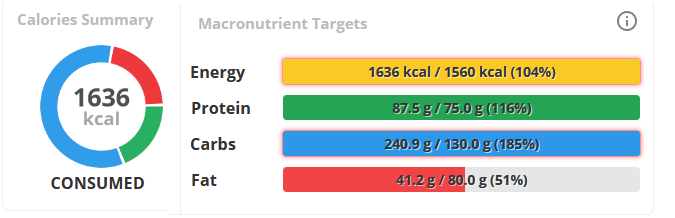
I log all the supplements, food, drink and exercise. I don’t check it much, now that I got the carb and nutrient targets where I wanted.
I’ve been using Cronometer. It’s free, and the app is super quick to use.
I set it up by adding the food I ate everyday (it does a lookup on a partial text). I added all the supplements. Now I just copy the previous day and edit individual values. It auto-calculates the nutrients for everything. You can choose which are highlighted, and you can set the range of acceptable values.
Week Averages
Making It Interesting vs Making It Work
I love food and eating. I’m a creature of habit but also sometimes bored. So I’ve tried things like making jello from plain gelatin and electrolyte powder and adding frozen blueberries at the end. I take peach fizzy water and mix it with stevia and matcha and sprinkle ginger on top. It helps that I love the taste of olive oil + salt + pepper + any vegetable. That I love eggs. And olives. That I tolerate fish pretty well with olive oil and heat or cool and pickles, sweet or not. That I love salad and avocado and olive oil. I like to saute jalapenos and then add the eggs or veggies. That I use curry powder and cumin in the lentils. And/or the greens. I use chai spices on the squash and yams. And did I mention olive oil? So this works for me because I already like the food on the list. I imagine it would be harder to transition if I didn’t like veggies so much.
And when I stick close to it, I feel noticeably less fatigued during the day. So this is what works for me, for now.
I stopped taking glucosamine at the start of this experiment. It took a week or so, but gradually joint pain increased. Things that hadn’t hurt started to hurt again, others that always hurt were worse.
I don’t have typical Rheumatoid Arthritis joint pain, with redness and swelling. My joint issues are soft tissue disorders, the worst being enthesopathies. I was playing soccer, landed on one foot and twisted, and heard a pop. The obturator internus separated from the hip bone. So did a third of my hamstring.
I’ve been diagnosed with everything highlighted above. Below is a pelvis. It’s not my pelvis. But I did have imaging of all kinds, revealing, the avulsion injuries, calcification on both ‘sit bones’ (where this image is pointing), and tendinosis on the upper outer hip.
When I’m at the gym, if I increase weight or reps to reach muscle fatigue, the limiter is a joint: knee, shoulder, elbow, wrist, or hip. If I push through the pain, I’ll end up with a tendinopathy that will keep me sidelined for weeks until it’s healed.
Not My Pelvis
Legendarily bad hips run in the family, in the very same people that had HD. My grandmother, who didn’t walk for the last 20 years, blamed the hips on her father. My aunt died from HD after 2 hip and 2 knee replacements.
“Depleting rheumatoid arthritis cells of HIP1 decreased their invasion capacities by nearly half, a property required by these cells to properly recover after cartilage and joint damage.”
Result?
I still have no answers for the joint/tendon issues. I suspect that since both skeletal muscle and bone density are affected, there will be further information on other connective tissue. Someday. Until then, I’m back on the glucosamine. Within a week I was feeling better, exercising longer.
Circadian Rhythm Disturbances in Huntington Disease
I stopped taking melatonin a few weeks ago. It wasn’t initially harder to sleep. In the last week or so, I’ve felt the cycle shift. I’m up about an hour later (both in the morning and at night) almost every day. A couple of weeks ago I was sleeping (and being sleepy) at 9pm, waking at 6am. Now I don’t sleep until 2am and can’t get up until at least 10am. I’ve also been napping mid-day, sometimes several times, so tired I couldn’t get up to work. I’ve gone through my usual attempts to have more energy. Resisting napping. Regular exercise. I take Zyrtec for asthma from seasonal allergies. It shows up it its most annoying form as fatigue. But that’s not it, this time. I’m still sleepy for hours after I wake up and immediately after naps. And I sleep 12-14 hours a day.
As a teenager I was a ‘night owl’ and required the usual extra sleep we now know they need. Later I had kids, was working and going to school, and was consistently sleep deprived. As an adult, I’d wake up after 7.5 hours, like clockwork – as long as those hours included the interval 4-6am. In the last decade with HD, it’s increased to 9-10 hours. It’s not just how long I’m in bed – it’s actually sleeping.
I bought a light box a few years ago and use it in the winter. I have great sleep playlists and use earbuds if necessary. I do all the usual recommended sleep hygiene including limiting screen time at night, not eating late, sleeping in the cool and dark.
2019 May 13: I’ll update over the next couple of weeks.
Update 1: that day, I took 4x 3mg melatonin at 8pm and, as a last resort, and advil and a quarter bar xanax. Woke up at 1am and took another advil. Was back to sleep in half an hour. Woke at 9am, napped at 10:30. Groggy all day, blamed the xanax.
Update 2: the next day, took 4x 3mg melatonin and an advil at 8pm. Slept 9pm – 9:30 am only waking once, briefly. Groggy all day, blamed the melatonin. Planning to half the dose tonight.
Update 3: It worked! The next few days I started with 5mg and increased to 9mg and sleep was increasingly regular. I moved the dose to 7pm, as it takes a couple of hours for me to get sleepy. I’ve now been sleeping about 9pm, waking to the alarm at 7. I don’t wake during the night unless there’s some other issue. And I don’t feel groggy all day. This is consistent over a couple of weeks.
Hack the diet. I can’t really change all these other variables if my diet is wildly swinging from oreos to broccoli. I’m doing a modified low carb thing that takes less thought than actively trying to measure keto. Or cook. I have enough to think about already.
limiting carbs
veg – and greens every day for leutein
eggs or tuna, but usually not meat (both for the world and my wallet)
no weird oils, avoid processed food except..
some protein powder?
fiber if needed
Exercise and Movement
I have a routine I try to get through every day. I suck at both repetitive exercise and schedules, so I’ve come up with something that is under half an hour and incorporates most of the list below:
Zyrtec/Cetirizine (seasonal allergies + asthma) Over 10 years of experience with this. After a decade, I finally remembered to start taking it *before* I am dead-ass tired every single day of allergy season.
Experiment with these supplements – do a trial of each while keeping relatively stable diet/exercise/other routines.
CoQ10 (Improves my HD symptoms a bit on high dosages.)
BCAAs (Allowed me to workout longer and harder.)
GABA (in progress)
Probiotics
Leutein (Are increasing vision problems related to the corresponding reduction as I havn’t been able to access my source (diet:greens) in traveling)
Thymus and possibly other organ supplements
Maybe nicotine, but I was addicted to it for 15 years. So maybe.
Other nootropics?
(FYI, I found in doing research for experiments that benadryl may not be a good choice if you have cognitive issues.)
Some of the list items presumably help with cognition and HD symptoms. Others reduce pain, mitigate joint problems, or correct known imbalances in my body that aren’t (directly) related to Huntington Disease.
Your body will have its own things to say about these.





 Mastering The Decline